The situation
Mompiche is a town surrounded by nature but underserved by the government. The absence of paved streets, drinking water, and sewage systems, not to mention a simple playground for the kids, highlights the pressing need for substantial infrastructure investment. The existing "park" in Mompiche is a neglected, unattractive area with concrete and sparse grass.
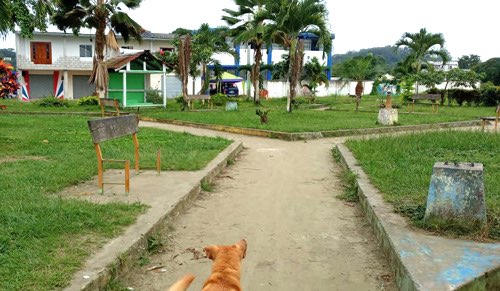
The Mompiche "park"
The project targets five key beneficiary groups:
The youth
The youth of the Bolivar community are African American, indigenous, multiethnic and multicultural. They will be responsible in the future for the delicate ecosystems between forest, river, mangroves and sea. Special emphasis will be placed on the empowerment of women. Please read the article about the situation of women in Ecuador and Esmeraldas.
Socio-environmental leaders
and their efforts in environmental and cultural conservation, focusing on transferring knowledge across generations.
Entrepreneurs
engaged in biological and touristic value chains,utilizing ecosystems as a platform for regenerative entrepreneurship.
Academic communities
from institutions across the country, fosteringlong-term exchanges to ensure research findings are applied and benefit the local territory.
Residents
who will benefit from workshops conducted by volunteers to enhance their skills and knowledge. These workshops could cover various topics such as vocational training, sustainable farming practices, artisanal crafts, digital literacy, and other relevant subjects. By engaging volunteers, the community center aims to tap into the expertise of individuals who can contribute their time and knowledge to uplift the local population and promote self-sufficiency.
The project promotes human rights and aligns with the UN sustainable development goals.
By focusing on empowerment, inclusivity, and education, the project actively contributes to the fulfillment of fundamental human rights for the local community, particularly for women and children. The project also aligns with several of the United Nations Sustainable Development Goals (SDGs) like: No Poverty, Quality Education, Gender Equality, Decent Work and Economic Growth, Responsible Consumption and Production, Climate Action, Life on Land, Partnerships for the Goals.
The community center will pursue its mission through nine primary pillars:
- Female empowerment
- High-quality, complementary education free of charge
- Film and music workshops
- Preservationand revitalization of ancestral indigenous and Afro-descendant cultures.
- Mitigation of climate change and sustainable utilization of natural resources through entrepreneurial projects.
- Implementation of workshops led by volunteers to enhance the skills and knowledge of residents, fostering self-sufficiency and personal development.
- Promoting an Active and Healthy Lifestyles through Sports Introduction.
Promote eco-tourism
This project has the potential to positively affect eco-tourism in the community by promoting sustainable practices, preserving the natural environment, and offering unique cultural experiences to visitors. It can contribute in various ways like: Conservation and Environmental Stewardship, Cultural Preservation and Authentic Experiences, Educational Opportunities, Local Economic Development, Community Involvement and Empowerment, Sustainable Tourism Practices, Collaboration and Partnerships with local tourism agencies.
Through its focus on sustainable practices, cultural preservation, education, economic development, and collaboration, the project creates a favorable environment for eco-tourism in the community. It offers an unique and authentic experience that appeals to eco-conscious travelers seeking to connect with nature, immerse themselves in local cultures, and contribute to positive social and environmental impacts. By embracing eco-tourism, the community can derive economic benefits while safeguarding their natural and cultural heritage for future generations.
You can download a detailed description of the project.
Read also:
Better than buying land.
Instead of solely purchasing land to prevent deforestation, our approach focuses on inspiring people not to sell and take active roles in protecting the land themselves. Discover more about our social-economic initiatives, including the Ariyani Chocolate Manufacture.

On the situation of women and children in Ecuador and Esmeraldas.
After the corona crisis just over one third of Ecuadors population earns less than $84.05 per month. Almost 15% live in extreme poverty with less than $47.37 per month. Women are particularly affected by unimployment and . Another problem is the high rate of teenage pregnancies. Ecuador has the highest adolescent fertility rate among all countries in Latin America and the Caribbean.